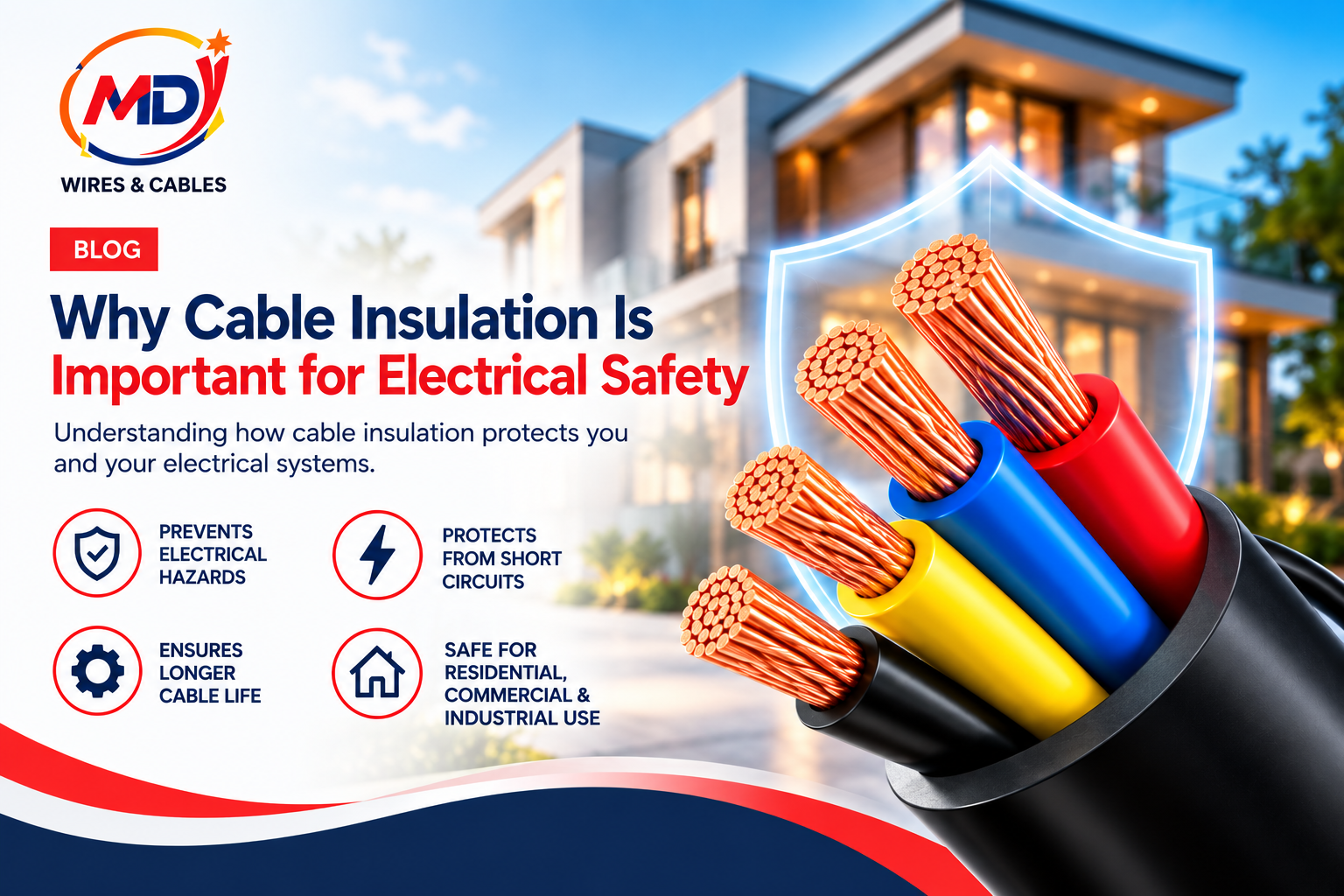
Electrical cables consist of conductive materials surrounded by insulation. While the conductor carries electrical current, the insulation provides a protective barrier around it.
Good insulation is an important part of cable construction because it helps separate the conductor from other conductive materials, surfaces and people.
What Is Cable Insulation?
Cable insulation is the material surrounding the electrical conductor.
It is designed to provide electrical separation and physical protection around the conductor.
Different cables can use different insulation materials depending on their intended application and product design.
How Does Insulation Help?
Proper insulation helps:
- Separate the conductor from surrounding materials
- Reduce the possibility of unwanted electrical contact
- Protect the conductor from certain forms of physical exposure
- Support safe and reliable cable use when installed correctly
However, insulation alone does not make an installation safe. Correct cable selection and professional installation are equally important.
What Can Damage Cable Insulation?
Cable insulation can be affected by several factors, including:
Physical Damage
Sharp objects, excessive pulling or improper handling can damage the outer insulation.
Excessive Heat
High temperatures beyond the cable’s specified operating conditions can affect insulation materials.
Improper Installation
Incorrect installation practices can place unnecessary stress on the cable.
Age and Wear
Over time, electrical cables may experience natural wear depending on their environment and usage.
How Can You Identify Possible Cable Damage?
Some visible signs that may require attention include:
- Cracked insulation
- Cuts or exposed conductor
- Burn marks
- Discolouration
- Excessive deformation
- Visible physical damage
If you notice damage to an electrical cable, avoid handling it unnecessarily and contact a qualified electrical professional.
Choosing a Cable With Suitable Insulation
The appropriate insulation depends on the application.
Before purchasing a cable, consider:
- Installation location
- Operating conditions
- Temperature requirements
- Mechanical exposure
- Voltage rating
- Manufacturer specifications
Why Product Information Matters
A cable’s packaging and technical information can provide useful details about its intended application, size, voltage rating and construction.
Customers should check this information instead of selecting a product based only on appearance.
Conclusion
Cable insulation is an important part of electrical cable construction. Selecting a suitable product and ensuring professional installation can help support safe and dependable electrical systems.
MD Wires & Cables focuses on providing cable products with clear specifications for different electrical requirements.
